.avif)
How to Pick the Right Paid Channel: A Small Business Guide to PPC Strategy
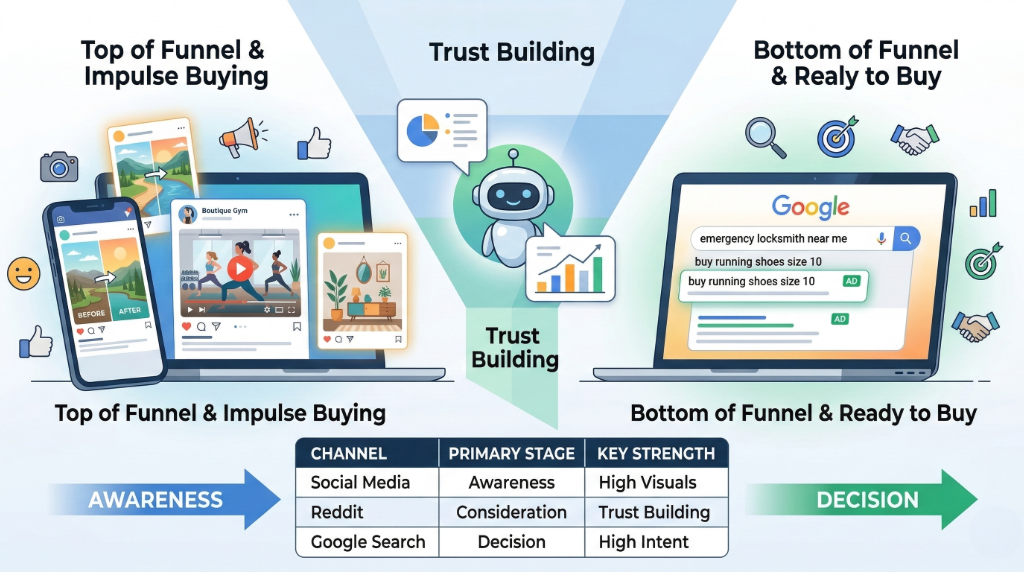
In the last guide, I covered how SEO builds your digital foundation and how PPC (Pay-Per-Click) advertising can accelerate your results. But here’s the question most business owners face next: which paid channel do I actually invest in?
Google? Facebook? Instagram? Reddit? The honest answer: it depends. And what it depends on comes down to three things: your bandwidth, your budget, and where your customer is in their buying journey.
Let’s break it down.
Before you spend a dollar on ads, you need to understand one concept: not every potential customer is in the same place mentally when they encounter your business.
Different advertising channels are built for different stages of this journey.
Tip: The key to smart spending is matching your channel to where your customer actually is. Don’t try to force a “Decision” ad on an “Awareness” audience.
Meta (FB/IG)AwarenessVisual products, lifestyle, impulseHigh-quality targeting & visualsRedditConsiderationNiche B2B, tech, high-research buysPeer validation & deep trustSearch (Google/Bing)DecisionLocal services, immediate needsHighest buyer intent
Social media platforms (Facebook, Instagram, TikTok) are where people go to scroll, not to shop. But that’s exactly what makes them powerful for the right type of business.
When someone sees your ad on Facebook, they weren’t searching for you. You appeared in their world. For products and services that are visual or emotionally compelling, social is incredibly effective. Think: a local landscaper showing a stunning “before and after,” a boutique gym with a high-energy class video, or a flash sale for a unique home gift.
Reddit is an underrated paid channel for products that require research or peer validation. Reddit users are highly skeptical of obvious ads. If you advertise here, come with real value: data-backed insights, honest comparisons, and content that genuinely helps the community.
Searchads on Google orMicrosoft (Bing) are the closest thing to a guaranteed intent signal in marketing. When someone types “emergency locksmith near me” or “buy red running shoes size 10,” they are on a mission.
As covered in the SEO guide, your landing page quality directly affects your ad cost. While SEO and PPC are different tools, the same fundamentals apply: a fast, clear, and relevant landing page will lower your Cost Per Click (CPC) and increase your ROI.
2. What Is Your Budget and Bandwidth?
A smaller budget concentrated on one high-intent channel will almost always outperform the same budget spread thinly across three platforms.
Crucial Step: Before you turn on the faucet, make sure your bucket doesn’t have holes. Ensure you have Conversion Tracking set up so you know exactly which ad turned into a phone call or a sale. Without tracking, you aren’t investing; you’re gambling.
3. Where Are Your Customers, and How Do They Buy?
The businesses that truly dominate show up at every stage. A customer sees your Instagram ad (Awareness), finds your blog when researching (Consideration), and clicks your Google ad when ready to buy (Decision).
A Note on Organic Content: You can use tools to automatically distribute snippets of your blog to social media, giving you a lighter presence across the funnel without extra spend.
The Bottom Line
There is no universally “best” paid channel. There’s the right channel for your goal, your customer, and your current capacity. The fundamentals: clear messaging, a trustworthy site, and a strong offer always come first.
Book Your Free 20-Minute Growth Chat